The Scaffolding Trap in Agent Architecture
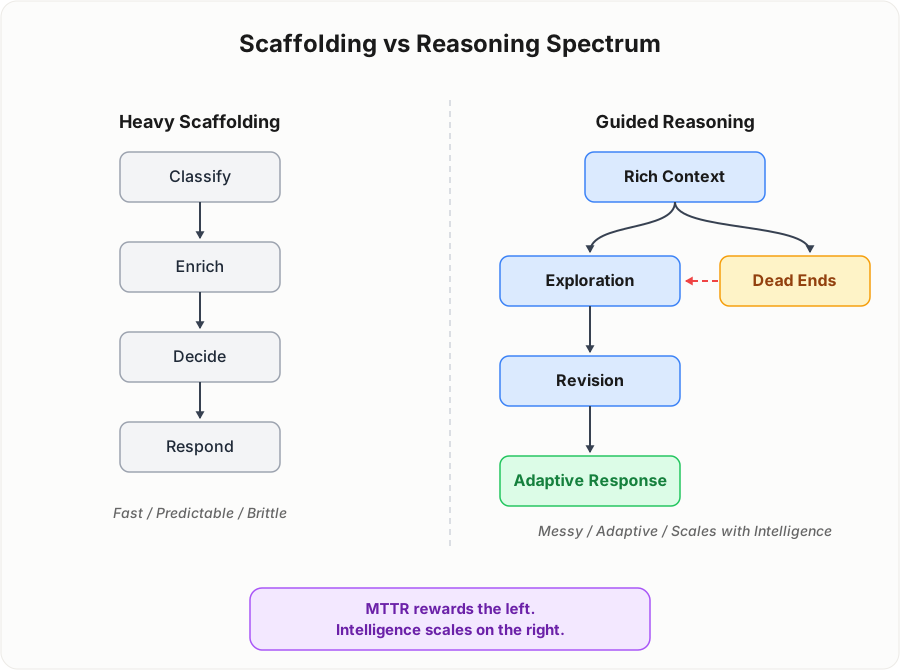 MTTR rewards predictable pipelines. Intelligence scales with messy, adaptive reasoning.
There’s a quiet mistake happening across the AI agent ecosystem right now.
To compensate for model limitations, teams build elaborate state machines, rigid prompt chains, and heavy guardrails. The result is fast, predictable, and benchmarks well.
It also doesn’t think.
When you force a model down a predefined decision tree, you’re not building an agent - you’re building a brittle Rube Goldberg machine. It works until a smarter model arrives that doesn’t need your 15 carefully choreographed steps.
Our metrics reinforce the trap. In SecOps we optimize for MTTR, which rewards streamlined automation. But genuine reasoning is messy. The model pauses, explores context, hits dead ends, re-queries, revises. That looks terrible on a dashboard - and it’s the architecture that actually scales with intelligence.
At Simbian, we’ve been thinking about this as “autonomy-agnostic” design - though I’ll admit we’re still finding the right balance ourselves. Today: heavy guidance, strict SOPs, tight scaffolding. Tomorrow: the ability to dial that scaffolding down without rewriting your system.
We’re seeing this play out firsthand. We’re building agents across SOC, pentesting, and threat hunting - and the default architecture has evolved noticeably with each one. What required heavy scaffolding six months ago now works with looser guidance and richer context. The models are catching up faster than our assumptions.
Benchmarks are a snapshot. Your architecture is a commitment.
What’s your scaffolding-to-reasoning ratio?