Why Long Context Windows Create an Asymmetric Advantage for Attackers
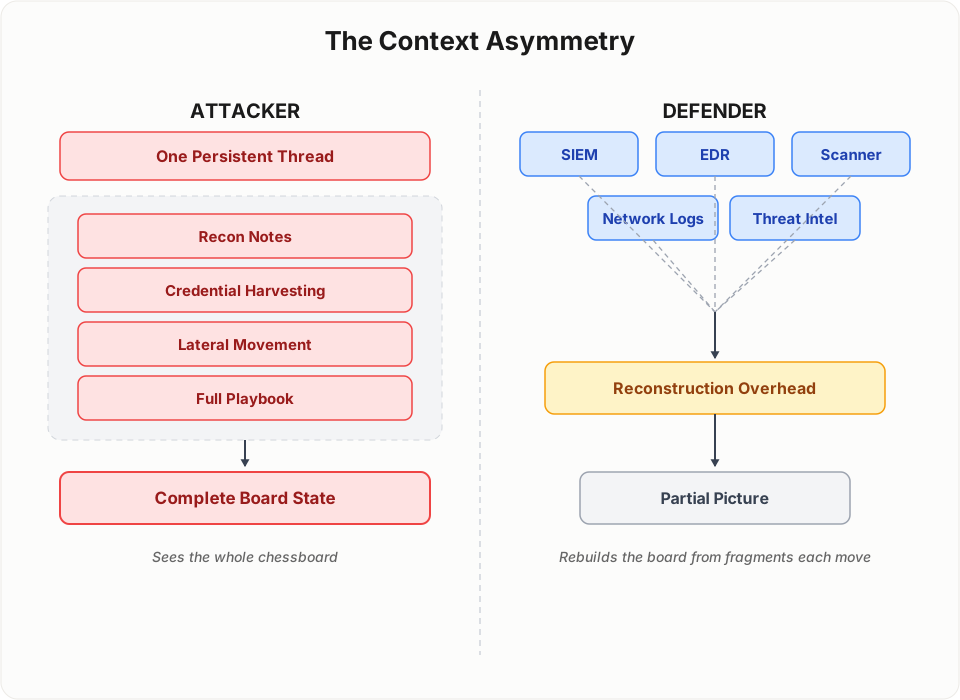 Attackers save the whole board state. Defenders rebuild from fragments every move.
AI’s expanding context windows sound like a defensive breakthrough. In reality, they’re structurally easier for attackers to exploit than defenders.
The Context Maintenance Problem
Attackers can feed AI systems a complete operational history in one thread - reconnaissance, credential harvesting, lateral movement - all stitched together. The GTG-2002 “vibe hacking” campaign (disclosed by Anthropic) showed this in practice: attackers embedded their playbook in a CLAUDE.md file, giving Claude persistent context across months of operations.
Defenders can’t. Security data explodes across SIEMs, scanners, and logs - most of it never structured for AI consumption.
It’s like chess: the attacker saves the whole board state, while the defender has to rebuild the board from fragments every move.
The Data Structure Advantage
Attackers shape reconnaissance notes, network maps, and stolen creds in whatever format best fits AI. Even a simple markdown file becomes perfect context. Defenders inherit schemas built for compliance or monitoring, not AI reasoning. Feeding these into models fragments context instead of compounding it.
Persistence vs. Reconstruction
- Attackers: AI builds persistent threads that accumulate knowledge over time
- Defenders: AI must reconstruct situational awareness from scratch on each query
The Token Allocation Problem
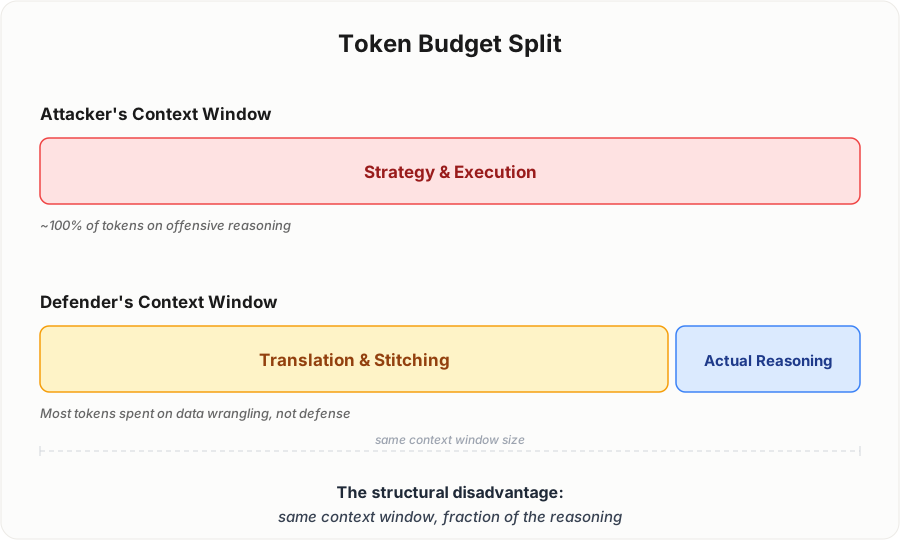 Same context window, fraction of the reasoning. Most defender tokens go to data wrangling, not defense.
Attackers use the full context window for strategy. Defenders spend much of it just translating and stitching systems together.
Information Architecture Reality
This isn’t about model size - it’s about information architecture. Attackers optimize for AI from day one. Defenders are stuck retrofitting.
As context windows grow, so does the asymmetry. Security architecture will need to evolve toward data lakes designed for context engineering, not just analytics or compliance.
How should defenders rethink their information architecture to close this gap?