The False Positive Rate: First Casualty of AI-driven SOC Operations
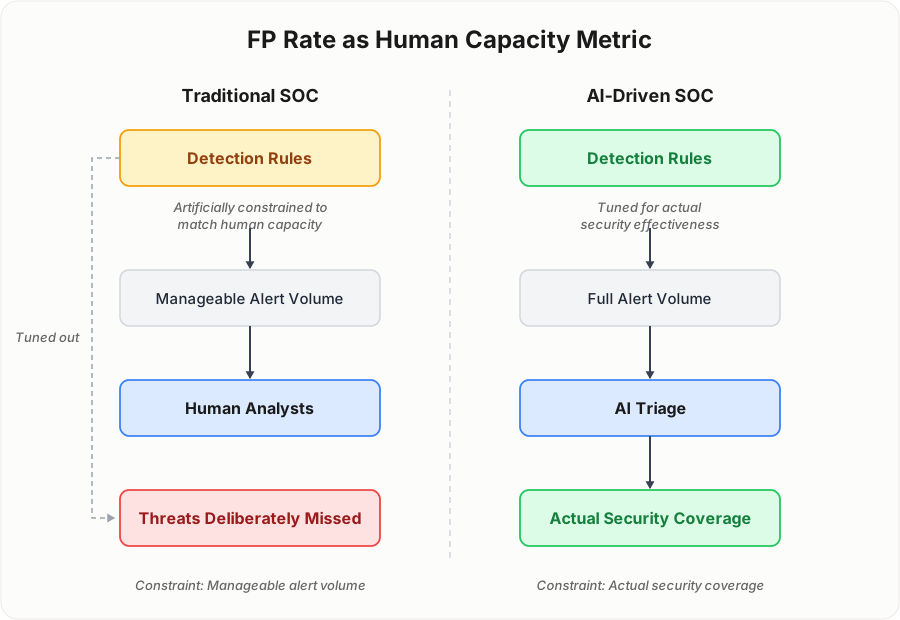 False positive rates were never about detection accuracy - they measured what humans could handle.
Working closely with security teams adopting AI SOC, we’re seeing the False Positive Rate become the first casualty of this shift.
Integrating AI into SOC workflows has surfaced an uncomfortable truth: False Positive Rates were never about detection accuracy - they were always about human capacity.
Here’s the insight:
- Traditional FP rates don’t measure true detection effectiveness - they measure what human analysts can realistically handle without burnout
- SOC teams tune detection systems to artificially constrain alert volume, prioritizing analyst capacity over actual threat sensitivity
- We’re knowingly missing real threats - not because detection logic is flawed, but because analysts simply can’t process everything detection could surface
Now with AI attacks arriving we have shattered even this artificial boundary. AI-generated attacks mimic legitimate behavior so closely, the distinction between “normal” and “malicious” has become nearly impossible. With these blurred lines - and FP rates already artificially limited - the metric itself loses meaning entirely.
The deeper realization: We’ve optimized security operations around human limitations rather than genuine detection effectiveness. A “well-tuned” FP rate of 2% isn’t success - it represents real threats we consciously chose not to detect to keep analysts from drowning.
What changes when AI handles first-line triage: With AI-driven triage, we can finally tune for security effectiveness instead of human digestibility. The question shifts from “How many alerts can analysts manage?” to “What’s the actual signal hidden in this noise?”
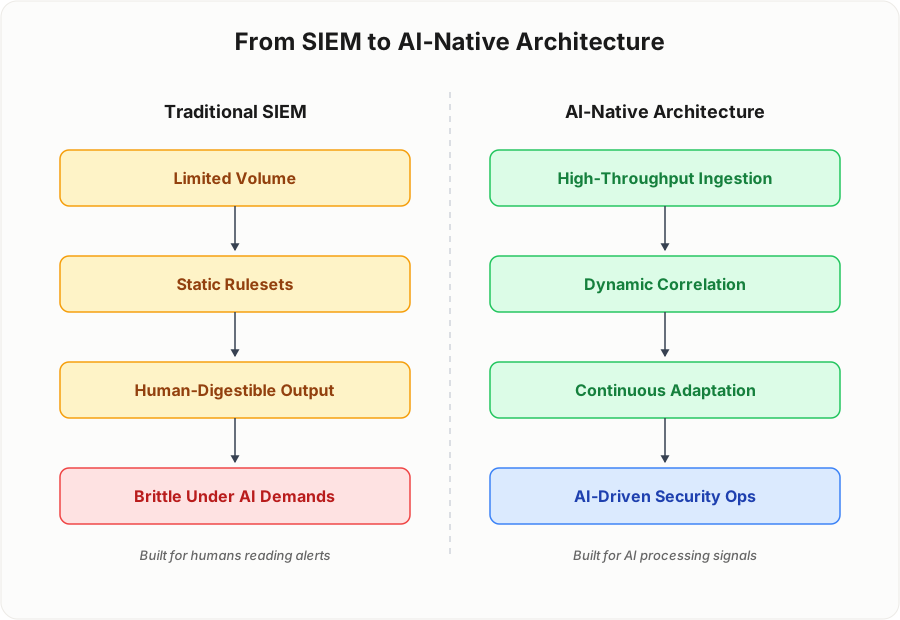 The architecture built for human-readable alerts becomes brittle the moment AI needs to process signals at scale.
Questions for all SOCs to consider:
- How artificially constrained is your current FP rate?
- If analyst capacity weren’t a factor, how much more sensitive could your detection be?
This shift doesn’t stop at investigation and response - it carries deep consequences for how detections and security data pipelines themselves are designed. Traditional SIEM architectures, built for limited volumes and static rulesets, become brittle under the high-throughput, dynamic correlation demands introduced by AI-driven security operations.