The Detection Bias Trap: Why AI SOC Evolution Needs Adversarial Balance
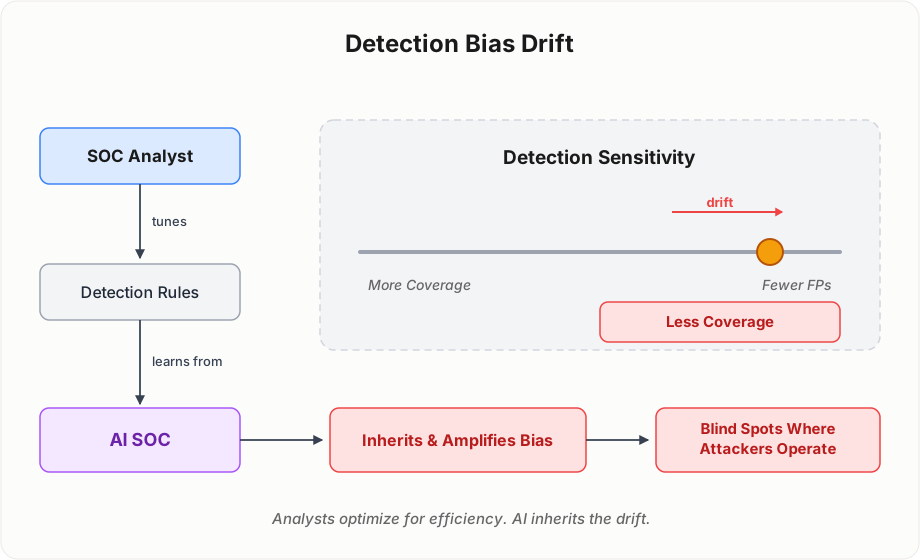 Analysts optimize for efficiency. AI inherits and amplifies the drift.
A lot of people think that the natural evolution of the AI SOC is toward better detection engineering - either creating more sophisticated rules or tuning out false positives more effectively. But both approaches amplify a fundamental risk: how do you validate that AI-optimized detections actually work against real adversaries?
Traditional detection tuning creates inherent drift toward conservative thresholds. SOC analysts, overwhelmed by false positives, naturally tune rules for operational efficiency over coverage. This introduces a deep-seated human bias into the optimization process. Even AI SOCs, which learn from these human-driven verdicts, can inherit and amplify this bias - favoring detection patterns that reduce their workload rather than maximize threat coverage.
When tuning is done entirely from the SOC perspective, detection rules evolve to minimize analyst fatigue rather than adversarial risk. This operational bias compounds over time, creating blind spots precisely where sophisticated attackers are most likely to operate.
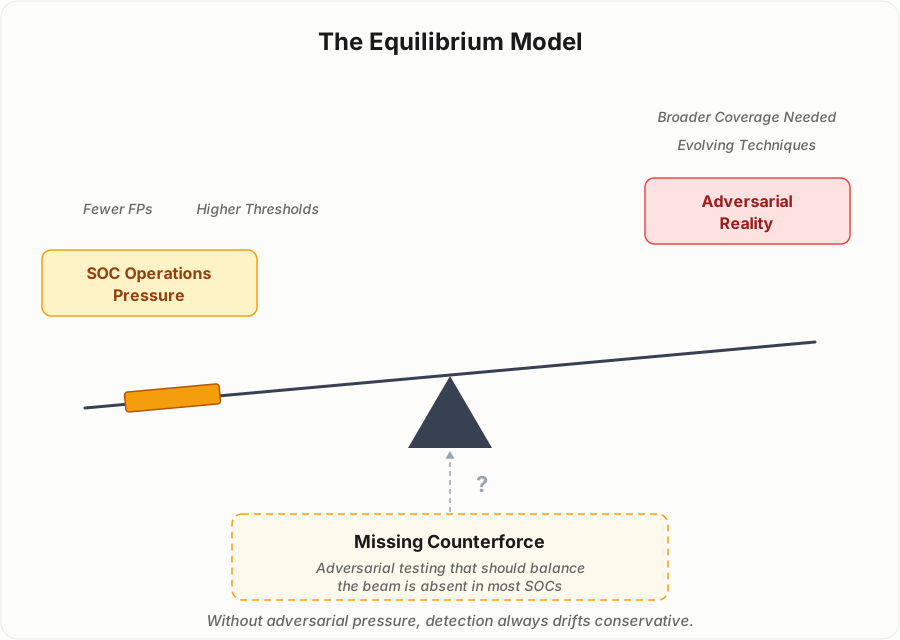 Without adversarial pressure, detection always drifts conservative.
The Equilibrium Problem
Effective detection requires balance between two opposing forces:
- SOC Operations: Pressure toward fewer false positives, higher confidence thresholds
- Adversarial Reality: Demand for broader coverage against evolving attack techniques
Without active adversarial testing, SIEM rules drift toward missing sophisticated attacks that operate just below detection sensitivity. AI-powered detection engineering at scale makes this problem exponentially worse.
The Missing Counterforce
Mature security operations need adversarial pressure to maintain detection equilibrium. Attack Libraries that continuously test detection capabilities provide the counterbalancing force necessary to prevent conservative drift.
An AI SOC needs a sparring partner, not just faster rule generation. Without systematic adversarial validation, even sophisticated AI-generated detections optimize for the same operational biases that created gaps in manual rule creation.
Exploring how AI agents can provide continuous adversarial testing could create the persistent pressure needed to keep detection systems sharp and effective against real attack behaviors.